
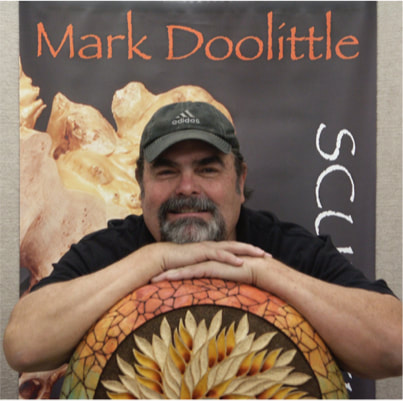
1) In your opinion, how important is it to have formal training as an artist?
I think that is dependent on the artist and person. Formal training can be a great help in the development of technical skills and design fundamentals. However, some people can acquire these through experience and reading alone, while others respond best in situations where there is formal training available. In my case, I had a lot of formal training in science, and it has served me well in art, as scientific research relies heavily on creativity and problem solving. Indeed, I approach my studio art with many of the same skills I developed to implement my research goals. With that said, every artist must have an innate desire for self-expression that cannot be taught or learned.
2) Which artists have influenced you, and how?
As a movement, Art Nouveau has had the most influence, with artists like Alphonse Muca expressing so beautifully in their artwork the form and symmetry of the natural world that I try so hard to express in my wood sculpture. Among wood artists, I am drawn to those that love to express and epitomize natural elements in their sculpture, including Alain Mailland, Marilyn Campbell, Bill Hunter, John McAbery and Kerry Vesper. I should also include the great ceramicist, Charles Birnbaum, and the many other talented artists that together inspire me to continually elevate my craft and creativity.
3) Besides art, what are your interests and how do they influence you in the studio?
My keen interest in biology has had the most influence on my art, particularly the form and symmetry of microscopic structures in plants and animals. I have always found a strong aesthetic in tissue and cellular architecture, and many elements in my sculptures have borrowed from these microscopic structures. My objective in art is to have my sculpture perceived as having “grown” rather than having been carved by an artist. I also love to incorporate fossil ammonites, fish and other organisms in my sculpture, mainly for their innate beauty but also because they symbolize the natural history of our planet that dates back millions of years.
I love classical music and opera, and I listen to hours of it as I carve sculpture; I also take daily hikes in Joshua Tree National Park, which is adjacent to my studio. These help to keep me in the right frame of mind as I create in the studio.
4) What inspires you to create and how do you keep motivated when things get tough in the studio?
I believe that creativity dwells within your idealism, not your cynicism. To be creative, you must rise above the daily turmoil and the self-doubt of your ego, and see the world with a clear eye. Some see beauty and grace, others tragedy and injustice while others find charm and humor. It is our innate desire as artists to express our ideals that stir our creativity. Thus, to be creative, you first must achieve a state of mind that accesses your idealism and not your cynicism. For me, music and nature hikes help in this regard, but being in the studio working is one of the best places to find inspiration to be creative. My studio has my raw materials on display (in my case, wood and fossils), keeping my eye always on the source of my creativity. I also suggest that you review your past work every so often, and see were you have been; it can have a positive impact on future ideas for new directions.
When things get tough in the studio, keep working! As artists, we must realize that not every piece will reach the pinnacle of our best work. While Mozart composed over 600 works of music in his short life, many were mediocre by his standards…but among them emerged the giants of his creativity. I believe that great pieces come in the process of making art continually. It is a mistake to hold out until the “great idea” comes along; we find creativity in the daily process of making art. In this regard, I would add that to “try and fail” is acceptable, but to quit is not. Try new things, both technically and creatively. Treat these for what they are…immature, embryonic, but potential paths to new ideas and abilities. Have fun and play, and suppress you critical eye; look past the obvious flaws and try to see the potential. For me, I often keep these embryonic works to myself…they are too fragile to be subjected to the scrutiny and criticisms of others. Visit them often and see where they lead.
5) How have you handled the business side of being an artist?
I try to use all available formats to promote my work: a website, social media, and soon a blog. I have traditionally sold my work through the American Craft Council (ACC) Show and the American Craft Retail Expo (ACRE), which both promote shows in the Western United States where I reside. However, I will be also marketing my work online through e-commerce sites like Artful Home, and to appeal to brick-and-mortar galleries as well. I believe the future of the business of art and craft will demand that artist take advantage of the variety of opportunities to market and sell your work.
6) Where do you see yourself in 10 years?
Making art. I would love to incorporate the female face in my sculpture repertoire; I have begun with a piece called “Beautiful Mind”, and found that sculpting the female face is technically and artistically a wonderful challenge. Nevertheless, my work will always be influence by my love of nature and biology, and it will always have an organic flair.
7) Could you talk about your latest series and what you are trying to achieve with it?
Along with freestanding sculpture, I am going to start producing wall pieces as well. I want the pieces to be extremely organic, with many free-flowing edges, and to incorporate several species of wood with contrasting colors, textures and grain. While I tend to work big, I also want to challenge myself in these new works to create some smaller, more intimate, pieces as well.
8) What advice would you give to an artist who is just starting out?
Have fun, don’t be intimidated, and work hard to achieve your own style and vision. Listen carefully to others, particularly respected teachers, colleagues and mentors, but remember that ultimately it is your vision, not theirs, that counts in your artwork. Listen to your “gut” and don’t try to create art based on what you think others may like or buy.
Finally, don’t be afraid to experiment and to enjoy your materials and the process of making art. It’s a cliché, but it truly is the journey, and not the destination, that is most important in life.
9) Why are you an artist, and how did you first decide that art was your path in life?
As you have already discovered, I did not start out as an artist, but as a biologist (and even before that, as a classical musician). As a graduate student in molecular biology and later as a teacher, I found that biological structures, particularly those seen through the microscope, were extremely aesthetic as abstract forms, and that outside of technical artwork, these forms had not been as captivating to artists as had biological structures seen with the naked eye (such as flowers). With this in mind, and with a latent interest in woodworking and carving, I began exploring these forms in a purely artistic way, first in gourds and later in wood. I soon became captivated and found that art was a path in life that I needed to explore, so here I am.
10) What are the major challenges you've faced as an artist?
The business of art is the most difficult challenge for me; I find it difficult to price my work objectively (I tend to under value my work). Most seriously, in these down economic times, the difficulty of selling work can impose self-doubt as well. Finally, the everyday course of life tends to draw everyone away from the studio, and it can be tempting to eliminate studio time in order to take care of immediate deadlines.
11) What are 3 words that best describe your work?
Organic; complex; graceful.
12) What is your favourite tool?
Probably gouges and rasps, as these tools let me feel the wood as I work, and are adept at creating long, flowing lines.
13) Where are you located?
I have a small home and two separate studios located on land adjacent to the border of the Joshua Tree National Park. This small National Park is about 150 miles east of Los Angeles, CA, and harbors a high-desert habitat with its hallmark rock formations that are truly unique and inspiring. I welcome studio visits by invitation only.

RSS Feed